

.avif)
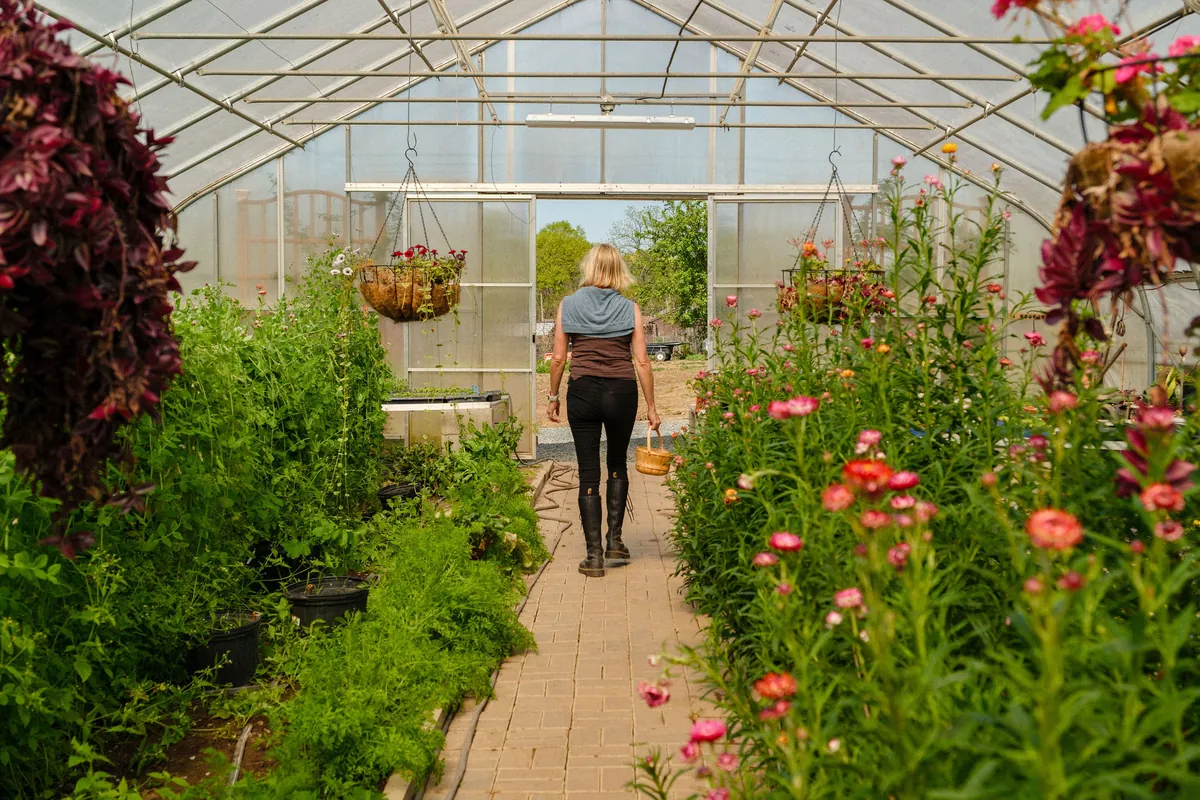
Farm-to-table should, in theory, be quite a simple idea: food grown or produced close to where it is eaten, with a direct relationship between the farm and the restaurant. Somewhere along the way, though, the term has become much harder to pin down.
Today, farm-to-table can mean almost anything. It might describe a restaurant with its own farm and a menu dictated by what was harvested that morning, but it can just as easily appear beside a restaurant sourcing a handful of ingredients locally. Increasingly, it has also become an aesthetic in itself, a shorthand for seasonality, rusticity, thoughtful sourcing or simply a certain kind of countryside “vibe”. None of those things are necessarily bad, but it does make it increasingly difficult to distinguish between restaurants where farming genuinely shapes the food and those where the language of farm-to-table is doing more work than the farm itself.
That question matters particularly to us at Farm & Manor because we deeply care about showcasing what we consider to be the best farm-to-table dining experiences. Before you can do that properly, you have to decide what you actually mean by the term. Does a restaurant need to have its own farm? How local should its ingredients be? Is sourcing from good nearby producers enough? And how much should the landscape, season and people growing the food actually influence what eventually reaches the table?
I don’t think the answer is a rigid checklist, and the best examples I have experienced are actually quite different from one another. But there are certain things I have started to notice repeatedly: the food tastes of where it came from, the season has a genuine influence over the menu, provenance goes beyond a few farm names printed at the bottom of it, and there is a clear relationship between the people growing the ingredients and the people cooking them.
I have a slightly strange way of describing what I am looking for when I eat this kind of food: I want to taste the ground. Not literally, obviously, but I want there to be something in what I am eating that tells me where it came from. The more farm-to-table restaurants I visit, the more I think that traceable connection between land, grower, kitchen and guest is what separates the real thing from the marketing version of it.
FOOD
When I say that I want to “taste the ground”, what I am really talking about is the undeniable freshness you get when eating produce that has been grown well and eaten at the right time. I want a tomato to taste intensely of tomato, or a leaf to have enough flavour that it actually matters on the plate. There is a particular quality to ingredients that have been picked when they are ready and haven’t travelled through a huge supply chain before reaching you, and I think that has to be at the heart of farm-to-table food.
The Garden Café at The Newt in Somerset is a good example of this. The restaurant looks out over the kitchen gardens and orchards that inspire its vegetable-led menu, with seasonal ingredients gathered from the gardens and produce also coming from elsewhere on the estate. What I like about this kind of cooking is that the produce doesn’t feel like the supporting act around the “main” ingredient. You get the sense that the starting point is what is actually growing outside, and the food follows from there.
I think this is also where farm-to-table becomes more complicated than simply saying “local”. Locality obviously matters, but Farm & Manor doesn’t define farm-to-table using a particular radius. Something grown badly five miles away isn’t automatically better than something grown exceptionally well thirty or fifty miles away. What is more interesting to me is whether where an ingredient comes from actually matters to the restaurant. Has it been chosen because of the farm, the grower, the variety, the soil or the way it was produced, or could the same ingredient simply be ordered from somebody else next week without changing anything?
There is also something about the best farm-to-table cooking where, even if the food is technically very accomplished, the original ingredient still tends to be recognisable. This doesn’t mean farm-to-table food has to be rustic or simple, but if the entire proposition begins with extraordinary produce, I still want to be able to understand why that produce was worth growing in the first place.
SEASONALITY
Seasonality follows naturally from this because if the food is genuinely being led by what is being grown, the kitchen has to surrender a certain amount of control. Almost every restaurant seems to describe itself as seasonal now, but there is a difference between putting asparagus on the menu in spring and actually allowing what is available from the land to dictate what you cook.
Riverford Field Kitchen in Devon is probably one of the clearest examples of what that looks like in practice. Its menu changes daily according to what is freshest and most abundant, with vegetables at the centre of the meal. There is something important in that order of events. The restaurant isn’t simply deciding what it wants to cook and then finding the ingredients; what has grown is deciding, at least in part, what the restaurant cooks.
Coombeshead Farm works in a similar way, with menus shifting according to what is best in its market garden and what the wider farm is producing. Thyme in the Cotswolds offers another version of the same relationship, with its kitchen garden supplying and inspiring the restaurants and the menus responding to what is being harvested.
This is where the phrase “seasonal menu” starts to mean something more substantial. The season isn’t just an inspiration for the food; it creates limitations as well. There will be things that grow in abundance, things that don’t grow particularly well at all, crops that arrive earlier than expected and others delayed by the weather. A genuinely farm-led kitchen has to respond to that.
I actually think that slight unpredictability is part of what makes this kind of dining interesting. If you returned to the same restaurant six months later, you should have a meaningfully different experience because the landscape itself is different. The farm shouldn’t just supply the restaurant; to some extent, it should be allowed to disrupt it.
PROVENANCE AND THE PEOPLE BEHIND THE FOOD
The word farm in farm-to-table is important too, and I think sometimes the farmer has become strangely absent from the conversation. Restaurants are very good at celebrating chefs, but with this type of food so much of what determines whether an ingredient is exceptional has already happened before it reaches the kitchen. The seed variety, soil, weather, how something was raised, when it was picked and the decisions made by the person growing it have all affected what the chef eventually gets to work with.
One of the things I love about Family Meal at Blue Hill in NYC is how much the provenance comes through in the experience. Despite being in Manhattan rather than out at Stone Barns, there is a strong sense of them bringing the farm to you. What strikes me is the confidence with which the staff presents each dish and explains the provenance, seasonality and stories behind the food served. It doesn’t feel as though “local sourcing” has simply been added as a line on the menu; there is an understanding of the food behind it.
I don’t think every waiter needs to give you a ten-minute biography, and actually too much explanation can start to detract from dinner, but the knowledge should exist. There is a considerable difference between saying “we use local farms” and knowing which farm something came from, why that particular producer matters and perhaps what is especially good about what they are growing at that point in the year.
Coombeshead is an interesting example of how much further provenance can go when you get very close to the source. The restaurant sits within a working farm, with the animals, orchards, market garden and bakery all forming part of the same place. In a setup like this, knowing where your food came from stops being about being able to name a supplier. You can start to understand the actual system that produced it, from how something was grown or raised through to how it eventually arrives at the table.
DOES A RESTAURANT NEED ITS OWN FARM?
For me, the answer is no. Having your own farm is probably the clearest expression of farm-to-table because there is an unusually direct relationship between what is happening on the land and what is happening in the kitchen, but I don’t think owning land should become the qualification in itself. A restaurant with a few raised beds outside isn’t necessarily more farm-to-table than a restaurant with no land at all that has spent years developing genuinely close relationships with its growers.
There is almost a spectrum of different models. At one end you have somewhere like Coombeshead, where the restaurant, animals, market garden and bakery are all parts of the same working farm. Thyme is another version of the estate model, where the farm and kitchen gardens feed directly into the restaurants. At the other end, you can have a restaurant in a city whose relationship with particular farmers and growers is still fundamental to what it serves.
I actually think a more useful question is: if you removed the restaurant’s relationship with those particular farms and growers, would the restaurant materially change? If the answer is no, and the same menu could be reproduced using essentially anonymous ingredients ordered somewhere else, I struggle to see that as farm-to-table in its fullest sense. If the food, menus and identity of the restaurant are dependent on the people and places supplying it, then that connection feels much more real.
This distinction matters because otherwise it becomes very easy to use a kitchen garden almost decoratively. Growing some herbs beside a restaurant is lovely, but it isn’t necessarily what makes the restaurant farm-to-table. It is the extent to which the land and the people producing the food actually influence what happens in the kitchen that matters.
SENSE OF PLACE
Then there is something less tangible, but which I think is a huge part of the best farm-to-table dining experiences: a sense of place.
It can’t be denied that some of the most memorable experiences are had travelling out to a farm or rural restaurant like Osip, Coombeshead or Blue Hill at Stone Barns, because you’re not only eating food connected to the landscape, you’ve also got the sensory experience of actually being in it. You see the fields, smell the countryside, experience the weather and season around you, and all of that creates context for what eventually arrives on your plate.
At Osip in Somerset, one of the things that stayed with me was beginning our experience outside, sitting in a meadow with cows in the field adjacent, before moving into the much more formal dining room. Somehow that initial immersion carried through. I felt as though I had already been placed within the landscape before properly beginning to eat from it.
Coombeshead gives you that context in a different way because the restaurant is so integrated into the working farm around it. You aren’t simply being told that dinner has come from a farm somewhere nearby; you are staying, walking and eating within the place that produced much of it. The journey between farm and table becomes unusually visible.
But I don’t think the physical location itself can be a requirement, because some restaurants manage to create a real sense of place without having the farm outside the window. This is where Family Meal at Blue Hill becomes particularly interesting. You are unmistakably in New York City, but there is still a strong sense of the farm being brought to you. In less rural settings, I think more effort simply has to go into creating that connection for the guest. On a farm you can look through the window and see the landscape, whereas in a city the provenance has to be communicated through the food, menu, staff and story around it.
And equally, being somewhere rural doesn’t automatically make a restaurant farm-to-table. This is probably where aesthetics have confused the definition slightly. There is now an idea of what this sort of restaurant should look like: wooden tables, handmade pottery, linen, a converted barn, perhaps some vegetables growing attractively outside. I love all of those things, but they are the visual language of farm-to-table dining rather than its definition.
The irony is that a restaurant can look perfectly “farm-to-table” while having relatively little meaningful connection to farming, just as an urban dining room can have an incredibly deep one. For me, the setting can make the experience more immersive, but the farming and sourcing have to exist underneath it.
SO, WHAT DO WE CLASS AS FARM-TO-TABLE?
Farm & Manor doesn’t draw an arbitrary line and say that a restaurant must grow a particular percentage of its own food or source everything within a certain number of miles. The best examples we experience are too different from one another for that to make much sense, and reducing it to a mathematical definition would probably miss what makes these places interesting in the first place.
What the places we showcase do have in common is a genuine relationship between kitchen and land. The quality and provenance of ingredients matter. Menus respond to seasons and availability rather than simply borrowing the language of seasonality. There are meaningful relationships with farmers and growers, whether those people work on the restaurant’s own farm or somewhere else. And there is some way for the guest to understand that connection, either because the landscape is literally surrounding them or because the restaurant manages to bring it into the dining room.
For me, there should also be a sense that the food belongs to where it is being served. That is probably the part that is hardest to measure, but easiest to recognise when it is there.
Perhaps that is ultimately what separates genuine farm-to-table from the marketing version of it. I don’t just want to be told that the ingredients are local, seasonal or thoughtfully sourced; I want to experience what that actually means through the food.
When I say that I want to “taste the ground”, what I really mean is that I want there to be a traceable line between the land, the people growing the food, the people cooking it and eventually the person sitting down to eat it. Sometimes you can literally see that land from the table and sometimes you can’t see it at all, but the connection should still be there.
That, for us, is where farm-to-table begins.
Share a Post